According to the Merriam-Webster dictionary, the term dragon means “A mythical animal usually represented as a monstrous winged and scaly serpent or saurian with a crested head and enormous claws.” These magnificent monsters have captured the human imagination for millennia. Cultures throughout the world have their own spin on grand, powerful, and mysterious reptiles. Dragons, whether the European serpents who first spawned the name or similar beasts who adopted it, are such icons of both ancient and modern culture that it seems a shame that they don’t exist in real life.
But here’s the thing: dragons are only mythical because they are so by definition. And that’s also just one definition, and in fact the second one provided by Merriam-Webster. The first definition, considered an archaic use of the term, is “A huge serpent.” That is to say, a real life, really big snake.

If we take a look at mythical dragons, the European ones alone boast massive amounts of variation. They may have two or four legs, or none at all. Wings aren’t guaranteed, nor is the ability to breathe fire. And dragons could have horns, fins, spines, or even fur or feathers.
So, what happens when we remove the “mythical” qualifier? That’s what we’re here to explore today. I’ve taken a look at several real life animals with certain qualities reminiscent of mythical dragons. Focusing on “serpents and saurians” (saurians being a loose term that covers lizards and certain extinct reptiles), I’ve created a list of noteworthy candidates based on size, appearance, certain abilities, and sheer draconic impact on human culture. I now present to you my top ten picks of special reptiles that could be considered real life dragons.
10. Dragon Snake

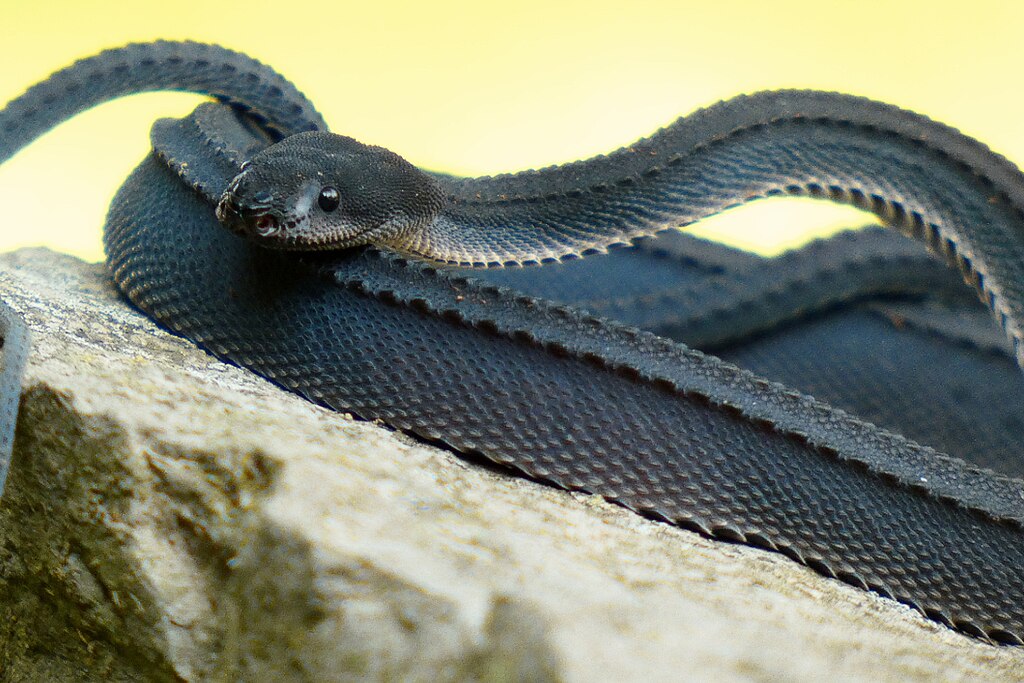
Southeast Asia’s Xenodermus javanicus goes by many names like the Javan tubercle snake, rough-backed litter snake, and yes, dragon snake. This long, slender snake’s most striking features are its raised scale ridges. These, along with the snake’s general “roughness”, are reminiscent of the scaly hides and ridges often seen in mythical dragons.
That said, the dragon snake isn’t particularly large, and it’s nonvenomous and pretty much harmless to humans. Its name and standout appearance still earn it a spot on this list, and it’s one of several snake and lizard species whose distinctive scales gives it an especially “draconic” look (the red-eyed crocodile skink being another noteworthy example). However, there are a few other features that I’m searching for in our truly “top” real life dragons.
9. Texas Horned Lizard

The horned lizards of North America are among several groups of lizards that use dragonish horns and spines for defense. Adapted for dry regions, these squat squamates are mostly specialized predators of harvester ants. That said, they are small hunters of smaller creatures. The Texas horned lizard, one of the larger-bodied species, fits easily in a human hand.
So, why does the so-called “horny toad” get a spot on this list in place of other spiny lizards, including bearded dragons? It’s all thanks to another defensive adaptation of the Texas horned lizard and some of its relatives, called “autohaemorrhaging.” When threatened, they can use increased blood pressure to squirt foul-tasting blood from their eyelids. They aim the blood at the eyes and mouth of would-be predators to confuse and deter them. While not quite fire breath, the creepy-cool factor of this projectile defense mechanism gives these lizards an extra draconic edge.
8. Eastern Diamondback Rattlesnake

As mentioned earlier, one of the more “old school” ways to define a dragon is as a very large snake. You can easily see the connection between dragons and snakes in the Bible, which uses both to symbolize the devil. In particular, the Garden of Eden story holds that the “crafty snake” originally had limbs, only losing them as punishment for tempting Eve. Legged snake ancestors as real life dragons, anyone?
The largest snake species, like the green anaconda and Burmese python, are nonvenomous constrictors. However, there’s a certain extra sense of dangerous power that comes from possessing venom. It’s one of the lesser-known draconic features, too. In the old English epic Beowulf, for example, the titular character dies not from the fire breath of the dragon he fights near the end, but from the toxins in its bite.
Enter the eastern diamondback rattlesnake, another North American species and one of the heaviest venomous snakes alive today. These intimidating rattlers have more than size and the presence of venom glands going for them, though. Their pronounced scales are “keeled” or ridged. This gives them that rough and more distinctive appearance that many associate with “dragon-like” reptiles. Their namesake rattles also help them stand out from other snakes and capture our imagination. Notably, the dragon-like Aztec “feathered serpent” deity Quetzalcoatl is thought to be linked with rattlesnakes.
And returning to Christian traditions, a very small sect of North American churches practice snake handling in their services. This is a practice of holding venomous snakes as a show of faith, based on a belief that the handlers’ faith will protect them. The Eastern diamondback is a popular choice, making it a sort of real-life dragon for the handlers to overcome.
7. Tyrannosaurus Rex

It’s long been suggested that the concept of mythical dragons came at least in part from discoveries of dinosaur fossils. Picture it: you’re out working on your farm when you come across the remains of some unknown, massive reptile. Without the modern wealth of widespread scientific information, you likely wouldn’t realize that the animal these bones belonged to died out millions of years ago. From there, it’s easy to see where stories of huge real life lizard-monsters lurking just over the horizon might originate.
Tyrannosaurus Rex, while not the largest of dinosaurs or even theropods, is easily one of the most renowned. These mighty ancient carnivores capture our imaginations in a very similar way as European dragons, with that sense of dangerous power that might induce fear, awe, or both. Even the name, which translates to “Tyrant lizard king,” has a bit of a draconic ring to it.
Of course, T Rex wasn’t the only fearsome predator of the Mesozoic. If you’re looking for something with a slightly more “dragonish” look, Carnotaurus was a smaller and quicker cousin of the Tyrannosaurs whose distinctive horns and ridges make it stand out.
6. Quetzalcoatlus

Another extinct “saurian,” the Quetzalcoatlus genus is of course named for Quetzalcoatl. Like I mentioned above, this Aztec deity doesn’t necessarily count as a dragon… but its pterosaur counterpart is another story.
Quetzalcoatlus were massive fliers with long bodies (if mostly neck), wings of webbed skin, and an appetite for meat… Much like several varieties of mythical dragon. But perhaps their most intriguing link to mythical dragons is their cultural one. Specifically, modern culture. After the discovery of Quetzalcoatlus and the widespread understanding of how it and other pterosaurs moved on the ground, its use of “wing-arm” movement began to catch our imaginations. Where many winged dragon portrayals had settled into a classic but scientifically improbable six-limbed body plan, now artists, writers, and movie makers had a viable alternative.
By putting a splash of pterosaur in their dragons and letting them use their wings as forelegs, fantasy creators got dragons that were both winged and quadrupedal, all while keeping to a much more sensible set of four vertebrate limbs. Thus, Quetzalcoatlus can be considered both a particularly ancient and surprisingly modern variety of real life dragon.
5. Philippine Sailfin Dragon

It’s no coincidence that we’ve found yet another reptile with “dragon” in its name here. Native to, yes, the Philippines, the Philippine sailfin lizard/dragon is a large lizard named for exactly the reason you’re thinking. Related to iguanas and chameleons, these lizards and their fellow sailfins use those tall back fins to help them swim. In fact, the Philippine sailfin dragon is semi-aquatic, meaning it spends much of its time in the water.
Believe it or not, that swimming ability is a big part of the real life dragon factor here. While we’ve been talking a lot about Western dragons so far, Eastern cultures often associate their dragons with rain, water, and rivers. And since sailfin lizards love the kinds of habitats with a lot of rain and easy access to rivers and coasts, these spiny Asian real-life dragons fit that bill perfectly.
4. Desert Horned Viper

One look at this sandy serpent of North Africa should give you a pretty good idea of how it earned a spot on this list. Like the eastern diamondback above, this venomous snake has distinctive keeled scales. More noteworthy, though, are the sharp “horns” (actually specialized scales) that earned this snake its name. Scientists aren’t sure of the horns’ exact purpose, but they do create a striking image.
To ancient Mesopotamian peoples, the combination of that image with the horned viper’s potentially deadly venom had a profound impact. Horned snake figures, most notably Mušmaḫḫū, Bašmu, and Ušumgallu, played roles as gods and monsters in Mesopotamian mythology. And some speculate that versions of these viper-based serpents, themselves occasionally described as dragons, gave rise to the classic image of the six-limbed dragon we know today. Thus, the desert horned viper is essentially the real life version of some particularly ancient dragons.
3. Flying Dragon Lizard

These Southeast Asian lizards aren’t the only reptiles that can glide, though they are one of the few… Assuming you don’t count birds, which are in fact the only living group of dinosaurs. And, you know, can in most cases outright fly. But “flying” dragon lizards have nevertheless earned their title and their high spot on the list for one undeniable reason. They have what has to be the closest thing to “draconic” back wings in the vertebrate world.
Dragon lizards are arboreal, meaning they spend almost all of their time high in the trees. To move quickly from one tree to another, they spread patagia, or gliding membranes, that are attached to specialized ribs and take to the air. While their patagia aren’t quite enough to manage true flight, they achieve enough lift to glide for impressive distances and with a lot of maneuverability.
In addition to giving them a reason to fly, that tree-dwelling nature provides flying dragon lizards with a neat draconic niche. Many of the mythical Asian dragons that aren’t busy with rivers instead associate themselves with the classical element of wood, much like these real life counterparts.
And as a bonus, what’s the scientific name for this lizard genus? Draco, literally the Latin word for “dragon.” And if that wasn’t enough, they are part of the agamid family. This broad group of lizards also includes the above Philippine sailfin lizard, plus a few “honorable mention” draconic lizards like the bearded dragons and Chinese water dragon. I’d say the real dragons were the agamids we met along the way… But believe it or not, we still have two real life dragons that just might fit the bill even better.
2. Spitting Cobra

Cobras are another of those venomous snakes with an important place in culture and history. Found in parts of Africa and Asia, both the “true cobras” and their relatives have captured our attention and become powerful symbols from Egypt to India and beyond. This is likely thanks to a combination of sheer size, the impressive image of their threatening hoods, and their tendency to rear up and hold their ground when threatened. One species, the aptly-named king cobra, is one of the largest venomous snakes out there and could easily have a spot on the list. So why the spitting cobras instead? Well, that’s for pretty much the same reason as the horned lizards further up: these clever serpents have projectile weaponry.
Spitting cobras have specialized fang structures that allow them to shoot their venom at their enemies. They can still deliver a powerful bite, but that requires a potential threat to get close. By instead “spitting” their venom, these cobras can defend themselves from further away, and thus in a less dangerous position. And while their venom won’t do too much against intact skin, they aim for the far more vulnerable eyes. If the venom hits its mark, it has the potential to temporarily or even permanently blind the target.
This remarkable adaptation is one of the more noteworthy forms of projectile natural weapon that can be compared to a mythical dragon’s fire breath. And since fire breath has yet to evolve in real animals, these hooded dragons’ real life “spitting” behavior makes for a phenomenal counterpart.
1. Komodo Dragon

Okay, show of hands: who all saw this one coming? The Komodo dragon has to be the reptile that best earns that “dragon” moniker. Huge size? Check. Fearsome predator? Check. Snake-like? Not only does it have a long body, this big guy and its relatives in the monitor lizard family also have forked tongues.
Oh, and don’t think we’re leaving those other monitors out. While monitor lizards vary in size, proportions, and behavior, they all have something going for them. Many species are excellent swimmers — which, with several varieties in Asia (along with Africa and Oceania), slots right into that water alignment. Others love the treetops — making them the wood-associated variety of Eastern dragon.
Some species, like the Komodo itself, are venomous. Not only that, but their hunting methods and the very existence of their venom were so little understood for so long that until recently, scientists thought they were taking their prey down with the bacteria in their saliva. And some still suspect that the bacteria works in tandem with their venom. So, you can add “mysterious” and “may or may not hunt with the use of a mystical plague bite” to the list.
If none of the other animals on this list quite convince you that they should be considered real life dragons, then trust me on this one. The Komodo dragon, and other monitor lizards, are real dragons.


Leave a Reply